
Seasonal Preparation
King Tides in Florida: Why They Flood Streets on Sunny Days and How to Protect Your Home
By the Flood Guard team | Updated | 5 min read
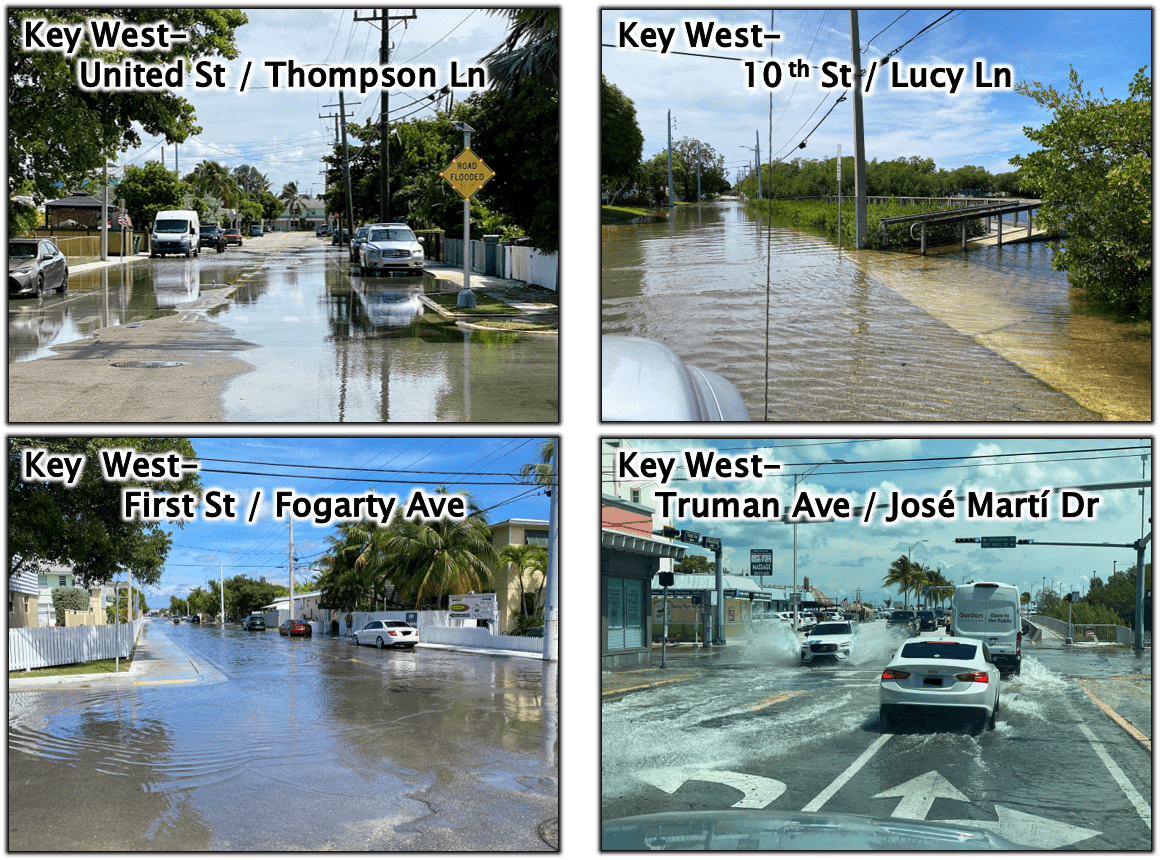
"Sunny day" tidal flooding in Key West. Photos: National Weather Service Key West (public domain).
Short answer: king tides are the highest predicted tides of the year. In Florida they come mostly in the fall, around the full and new moons, and they can flood streets, parking lots and ground floors with seawater on a perfectly sunny day. Add wind or rain and they get worse.
What causes a king tide?
Tides are driven by the moon and the sun. A few times a year, the moon is at its closest point to Earth while it lines up with the sun, and the tide reaches its highest level of the year. In South Florida, the City of Miami Beach says king tides can run more than a foot above the average high tide. Seas are also warmer and slightly higher in the fall, which adds to it.
When are king tides in Florida?
Mostly from September through November, with smaller peaks in December and in spring and summer. For 2026, the South Florida Water Management District listed high-tide periods of October 22 to November 12, November 22 to 29 and December 22 to 27. Miami Beach listed peak high tides from November 23 to 26, around 7 to 10 a.m. and p.m. Water can stay high for an hour and a half to two hours on either side of the peak.
October 2026: a king tide for the record books
The king tides of late October 2026 were among the worst ever measured. The National Weather Service in Miami recorded a preliminary peak of 2.54 feet above the average high tide at Virginia Key on October 27, the third highest since 1994. Only Hurricanes Irma and Wilma pushed the water higher, and there was no hurricane anywhere near. Strong onshore winds stacked extra water on top of the tide.
Downtown Fort Lauderdale flooded during its boat show, the Las Olas Bridge closed, and seawater spilled over seawalls from Hollywood to North Bay Village and Islamorada. Up the coast in St. Augustine, a nor'easter on top of the king tide flooded streets near Flagler College and City Hall.
Why sunny-day flooding keeps getting worse
Many coastal storm drains empty by gravity. At normal tides that works. At a king tide, the outfall is underwater, so seawater flows backward up the pipes and bubbles out of the drains in the street. As sea level rises, the same tides reach higher, and flooding that once happened a few days a year happens more often.
How to protect your home from tidal flooding
- Know your tide days. Your city and the National Weather Service publish king tide dates every year. Plan around them.
- Protect your lowest openings. Tidal water rises slowly and finds the lowest door, garage or slider. Flood panels block it before it gets inside.
- Keep the cars out of it. Saltwater ruins vehicles. Move them to higher ground or a garage you've protected.
- Check your seawall and backflow valves. A low or cracked seawall and drains without check valves let the tide straight in.
- Rinse after. Saltwater corrodes metal and kills plants. Hose down anything it touched.
King tides are predictable, which means you can be ready. Flood Guard panels can be put up by one person in minutes and stored until the next tide. Book a free assessment.
Sources: City of Miami Beach, South Florida Water Management District via Florida Atlantic University, National Weather Service Miami via the Florida Public Radio Emergency Network, FOX Weather and News4JAX, October and November 2026.