
Technology & Innovation
Garage Door Flood Barriers: Protecting the Widest Opening in Your Home
By the Flood Guard team | Updated | 5 min read
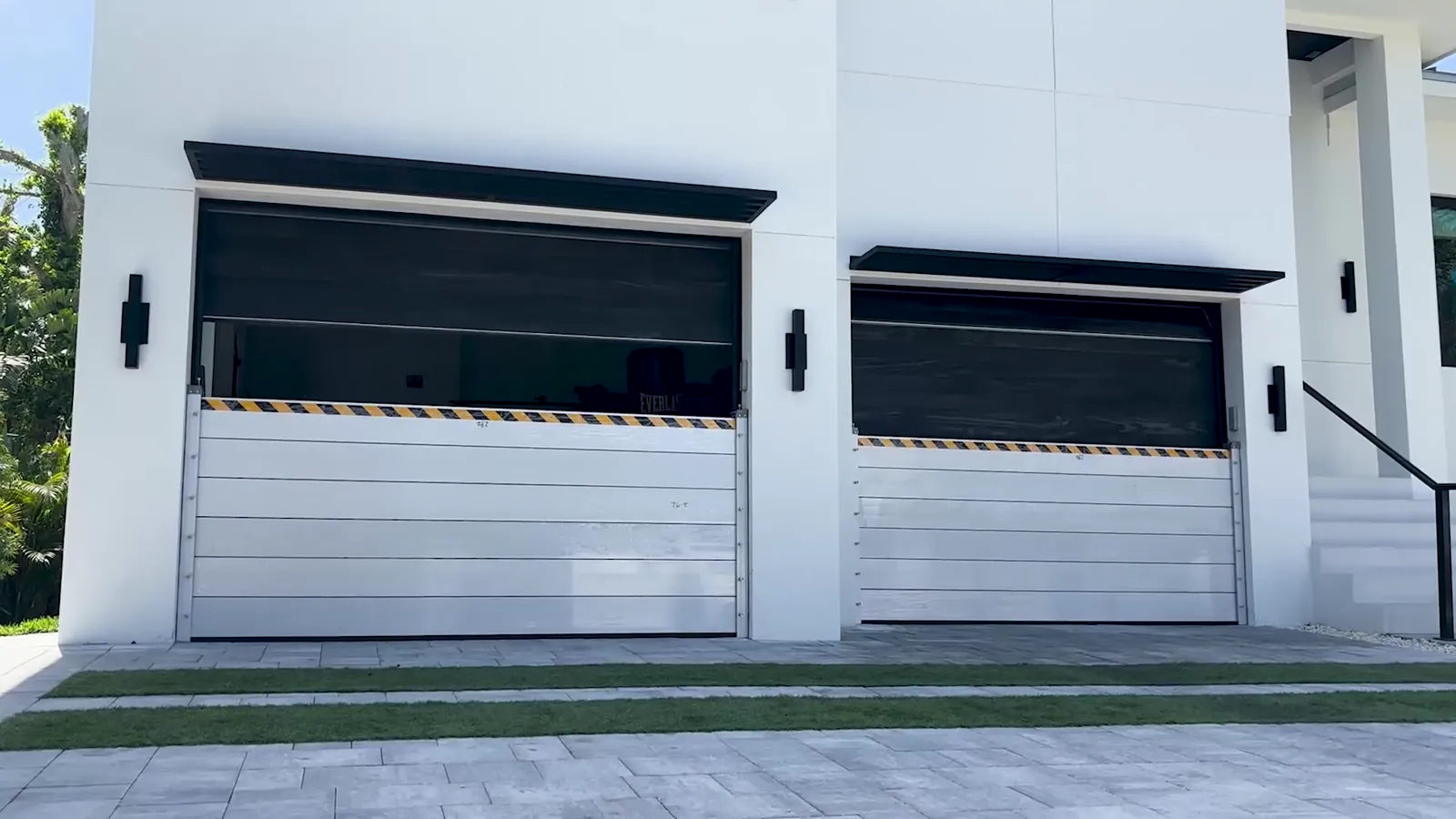
Short answer: the garage door is usually the widest, lowest and leakiest opening in a Florida home, which makes it the first place floodwater gets in. A custom flood panel system with removable center brackets can seal single, double and extra-wide garage openings, and one person can put it up in minutes.
Why garages flood first
- They sit low. Many garage floors are a step below the house, close to driveway level.
- Garage doors aren't watertight. The rubber strip along the bottom keeps out leaves and light rain. Floodwater pushes right past it and through the panel joints.
- They're wide. A double garage can be 16 feet or more of open wall, which means more water pressure to hold back.
- Water doesn't stop at the garage. From there it reaches the laundry room, the door into the house, your cars, freezers, water heater and everything stored on the floor.
How a garage flood barrier works
- Tracks on each side. Aluminum tracks are mounted permanently on each side of the opening, inside or outside depending on how the garage is built.
- Removable center brackets for wide doors. Long spans are split by center brackets (posts) that you set in place before a storm, so each section of panels stays strong under water pressure. Larger openings can also use support buttresses.
- Stacked panels. Light aluminum planks slide down into the tracks and lock together into one wall, up to the planned water height.
- Gaskets everywhere. EPDM rubber gaskets seal every joint, and a softer bottom gasket presses into the driveway or slab, including slopes and uneven concrete.
- Compression on top. A top cap and stainless steel bolts squeeze the stack so the seal is watertight.
When there's no storm, the panels and brackets go back into storage and the garage works normally. All you see are the slim tracks, which can be finished to match your home.
Things we check on every garage
- The width and height of the opening, and how high water could get there
- Whether the tracks fit best inside or outside the door, and whether the wall needs a build-out
- The condition and slope of the floor where the bottom gasket will seal
- Where to anchor center brackets in the concrete
- Any side doors, vents or gaps that would let water around the barrier
Don't skip the other openings
A sealed garage won't help if the back slider is open to the water. We measure every door, slider and garage below the planned water level so the whole house is covered.
See the Flood Guard system, get a quick online estimate, or book a free assessment.